Does a Small Restaurant Really Need a POS? Cost & Efficiency Breakdown
Aug 26, 2026
When starting or running a small restaurant, cafe, or food truck, your initial capital budget is under constant pressure: lease deposits, interior fit-outs, commercial kitchen equipment, furniture, and inventory.
Amidst these expenses, POS hardware vendors frequently pitch bundles: "Touchscreen POS Terminal + Thermal Printer + Cash Drawer" starting from $800 to $2,500, accompanied by mandatory software subscription fees of $50 to $150 per month.
The essential question is: Does an independent small-to-medium restaurant truly need such an expensive POS hardware setup?
1. What Are You Really Paying For in a Traditional POS?
A legacy POS package comprises:
- Bulky Hardware: A heavy desktop terminal with resistive touchscreens and tangled power cables.
- Proprietary Operating Systems: Prone to software crashes in hot, humid, or greasy kitchen environments.
- Complex Enterprise Bloat: Heavy inventory depletion tracking down to the milligram, intricate shift scheduling, and enterprise accounting integrations that small operations rarely utilize.
For independent dining venues with under 25 tables, the core operational requirements are simple:
- Guests see the menu and order without delays.
- Floor and kitchen staff know exactly what to prepare for which table.
- Cashier records payments accurately without ticket losses.
2. Head-to-Head Comparison: Traditional POS vs. Cloud-Native Mobile
| Comparison Metric | Traditional POS Hardware Bundle | Mobile Cloud Platform (TaoMenu) |
|---|---|---|
| Upfront Hardware Cost | $800 – $2,500 | $0 (uses staff smartphones) |
| Annual Software Fees | $600 – $1,800/year | Free forever tier or budget-friendly Pro |
| Setup & Launch Time | 2 – 7 days (shipping, cabling, training) | 5 minutes (instant registration & print QR) |
| Counter Space Taken | Takes up half the cashier desk | Zero counter space (in staff pockets) |
| Power / Internet Outage | Complete system downtime | Continuous operation via cellular 4G/5G |
| Guest Experience | Waiter handwrites tickets or taps terminal | Guests scan QR to view photos and submit orders |
| Hardware Maintenance | Expensive on-site technician repairs | Zero maintenance, automatic cloud updates |
3. When is a Smartphone-Based System Best for You?
A mobile-first QR ordering setup is the ideal fit if your establishment is:
- A noodle shop, diner, breakfast restaurant, or bakery.
- A takeaway coffee stall, bubble tea kiosk, or food truck.
- Operating in a compact footprint with limited counter space.
- Focused on minimizing upfront capital expenses to invest in food quality and customer experience.
- Managed by a lean team of family members or 1–3 floor staff.
Conclusion
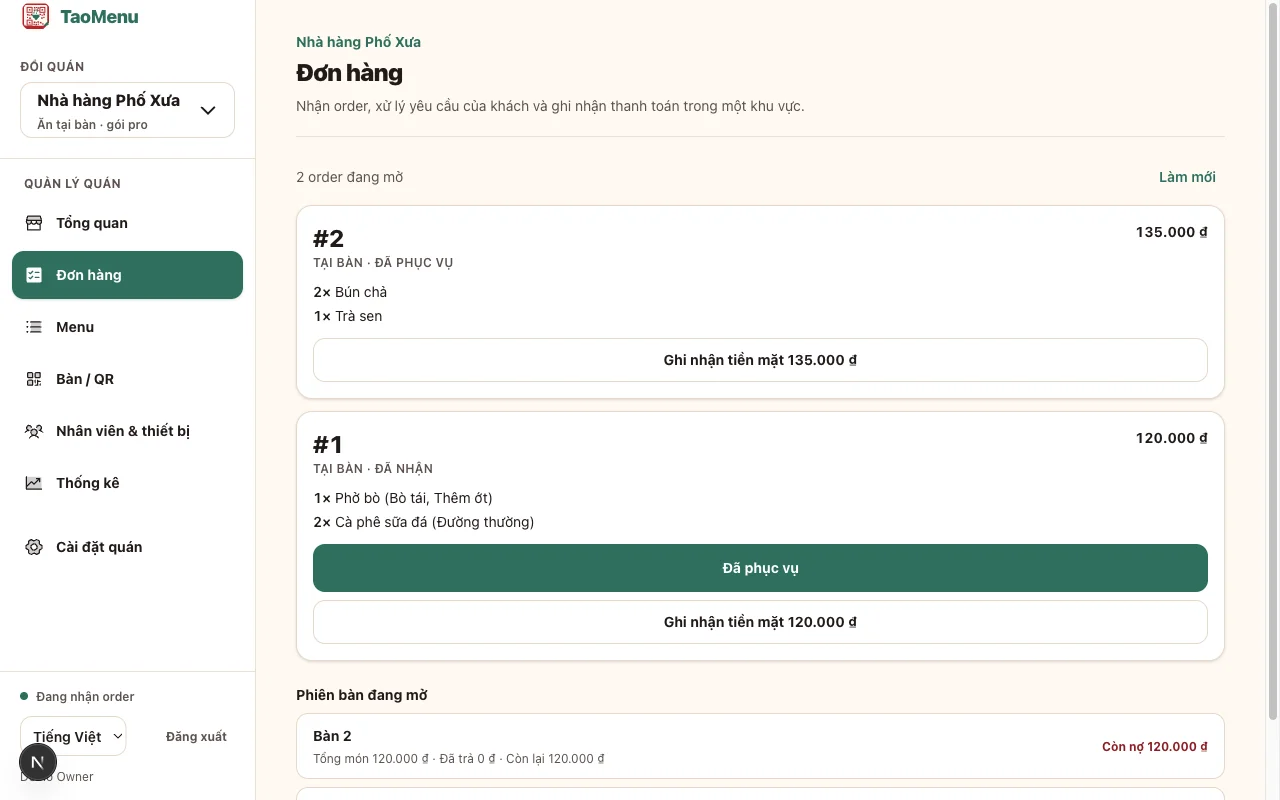
Don't let aggressive hardware sales reps eat away at your vital startup runway. With modern web solutions like TaoMenu, a standard smartphone provides all the power, elegance, and reliability you need to run your business smoothly.
👉 Learn more: