What is a Digital Menu? A Complete Guide for Restaurants & Cafes
Aug 26, 2026
In today's food & beverage (F&B) industry, digital menus (also called e-menus or QR menus) have evolved from an emergency pandemic measure into a standard operational tool. From cozy family diners and specialty coffee shops to bakeries and bustling street eateries, replacing static paper booklets with interactive digital menus is transforming dining.
What exactly is a digital menu, and how can small dining spots benefit from adopting one? Here is everything you need to know.
1. What is a Digital Menu?
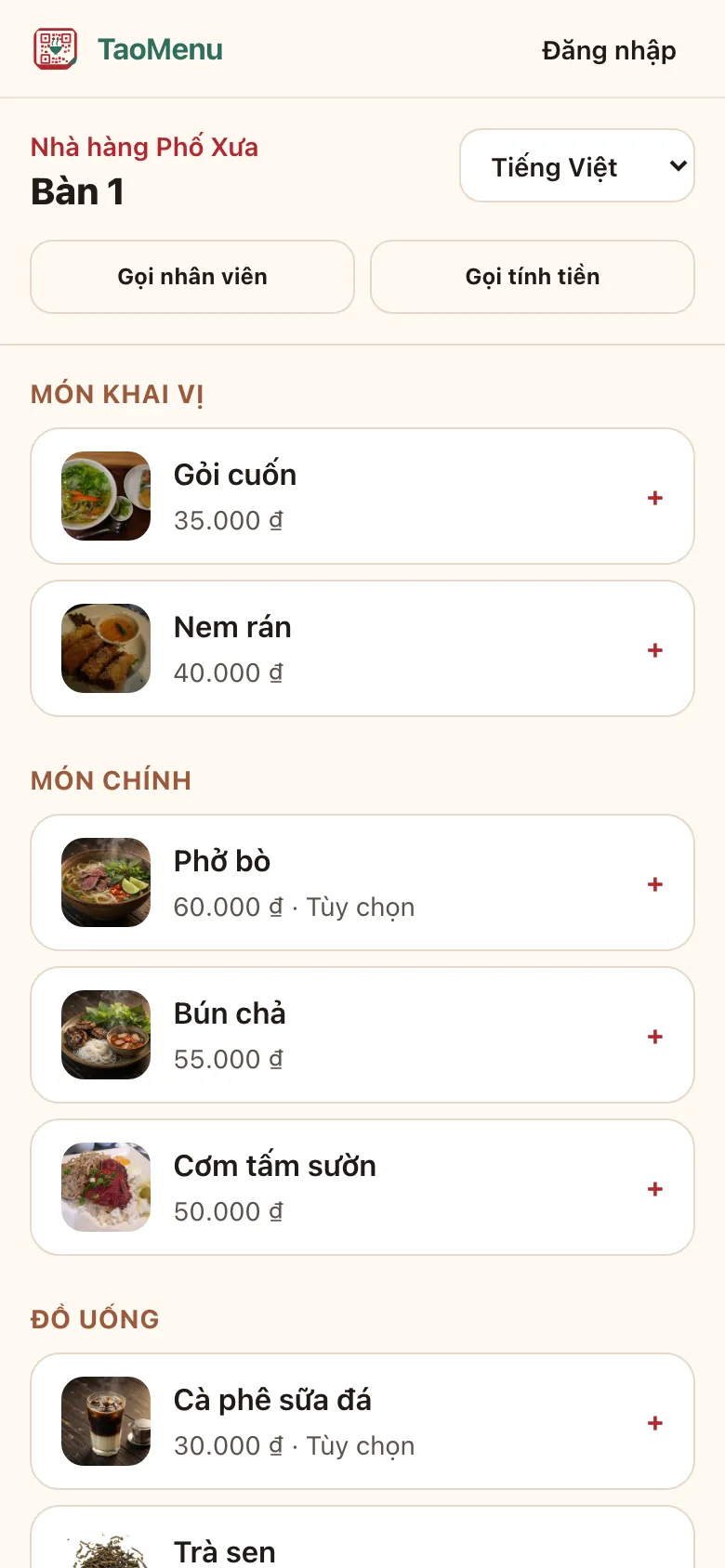
A digital menu is an interactive, digital version of a restaurant's food and beverage offerings. It displays items, prices, high-resolution photos, dietary descriptions, and customizable options through digital devices like smartphones or tablets.
Rather than just uploading a flat picture or PDF to the web, a modern digital menu platform (such as TaoMenu) operates as a lightweight, responsive web application:
- Guests scan a table QR code with their mobile camera to open the menu instantly.
- No app download or registration is needed for customers.
- The layout adapts automatically across all screen sizes (iOS and Android).
2. Common Types of Digital Menus
- PDF / Image QR Menus:
- Pros: Simple to upload initially.
- Cons: Customers must pinch and zoom to read; slow loading over weak mobile data; cannot update out-of-stock items without redesigning the file.
- Dedicated Table Tablets:
- Pros: Large display, high-end look.
- Cons: Expensive hardware costs ($200–$500 per table), battery management overhead, risk of screen breakage.
- Mobile Interactive Web QR Menus (BYOD - Bring Your Own Device):
- Pros: Zero device investment, instant price and item availability toggles, AI multilingual support, and direct order placement.
- Cons: Requires an active internet connection (Wi-Fi or cellular).
3. Core Benefits of Switching to a Digital Menu
1. Eliminate 100% of Menu Reprinting Costs
Whenever ingredient costs fluctuate or seasonal specials change, traditional restaurants spend hundreds of dollars reprinting physical menus. With a digital menu, open your smartphone, edit prices, and publish—all table QR codes reflect changes in seconds.
2. Instant Out-of-Stock (Sold Out) Toggles
Having a waiter take an order only to return minutes later apologizing that the kitchen ran out of ingredients ruins customer impressions. A digital menu lets managers toggle an item off with one click from their phone.
3. Boost Average Check Size with Modifiers & Add-ons
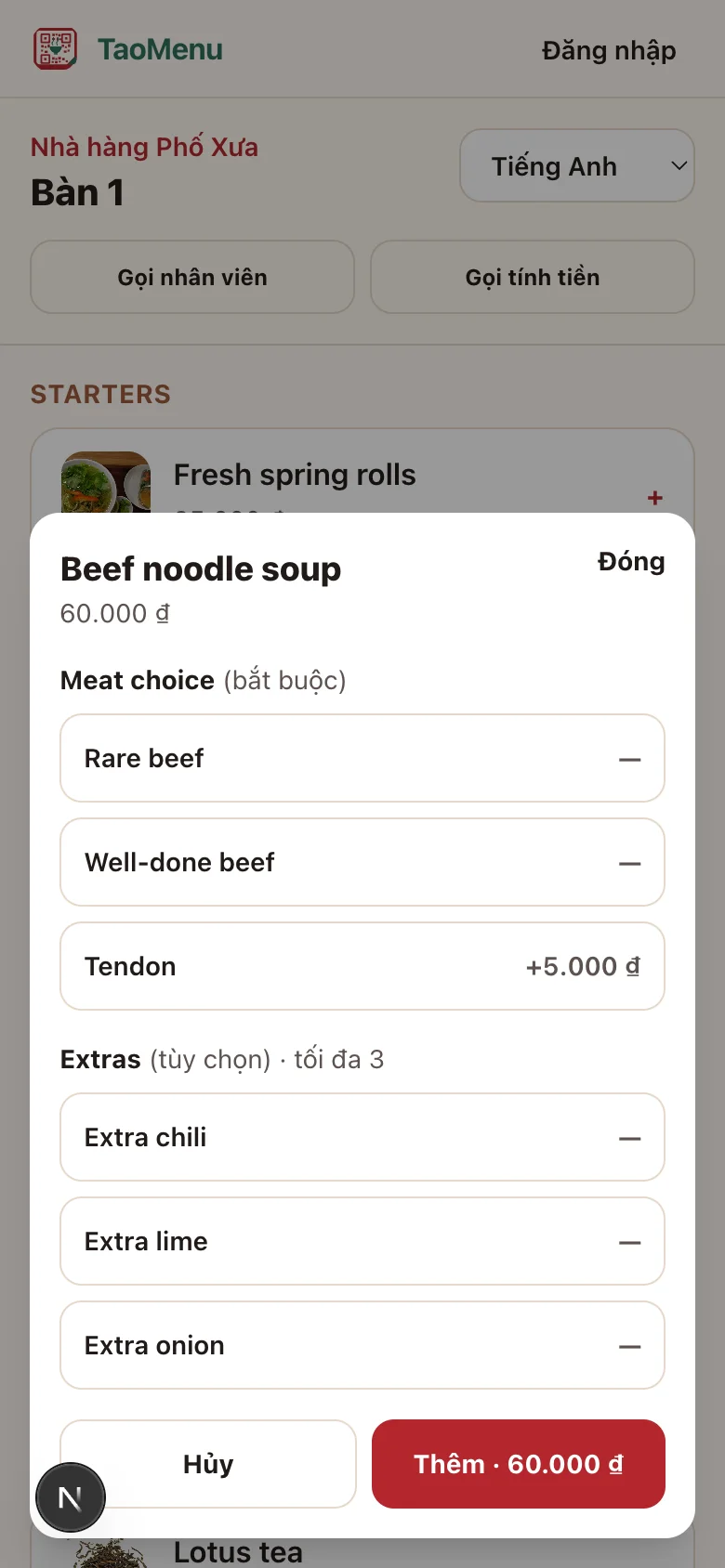
Visual imagery drives appetite much better than plain black text. Furthermore, digital menus effortlessly prompt add-ons such as: Extra cheese (+$1.00), Upsize Drink (+$0.80), Less Spicy—significantly increasing average spending per order.
4. Welcome International Tourists with Multilingual Menus
If your restaurant is in a tourist destination, digital menus can automatically translate descriptions into English, Chinese, Japanese, and more, allowing overseas guests to order comfortably without foreign-language staff.
4. How Small Restaurants Can Get Started
Getting started requires no expensive software contracts:
- Create a free account on TaoMenu.
- Enter your dishes, prices, and upload appetizing photos.
- Download and print pre-formatted A4 table QR sheets.
- Place QR codes on tables and start serving guests faster.
👉 Learn more: